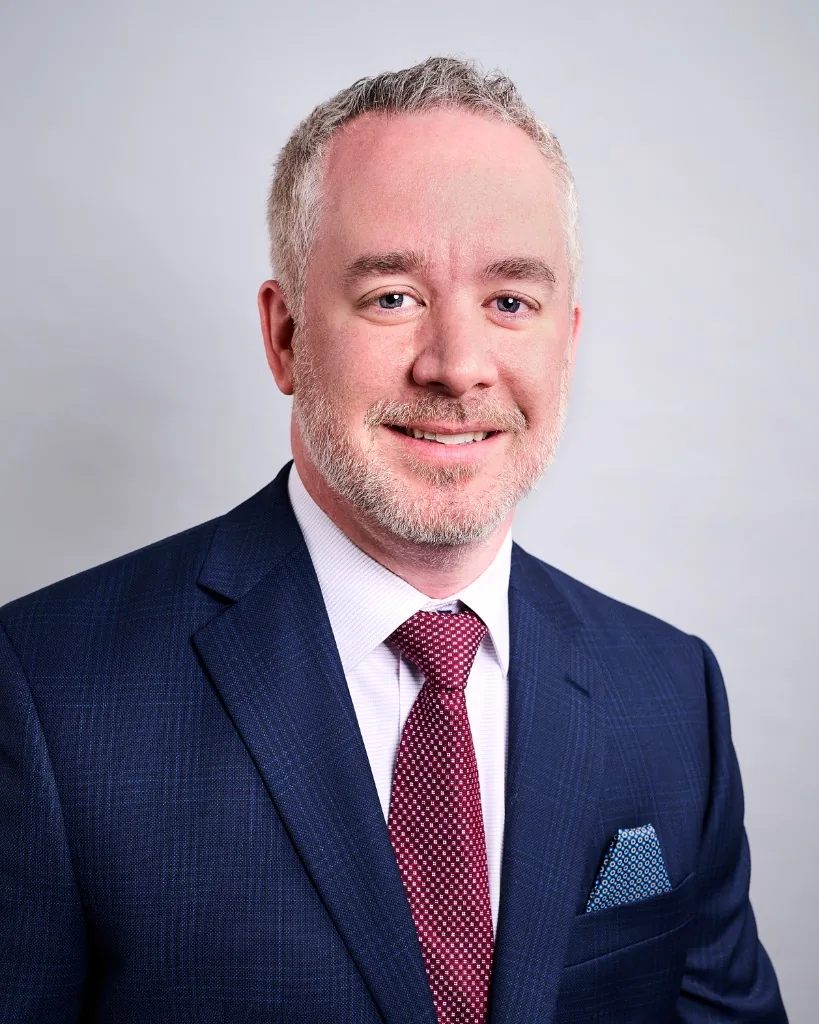
Todd Wenning, an investor I respect deeply and the writer behind Flyover Stocks, recently published "13 Thoughts on Investing," a compact piece that reads like a field manual for anyone serious about building durable wealth. I found myself nodding through every point, because these aren't theoretical abstractions. They are the operating principles we live by at Sirmium Capital every single day.
I want to walk through the ideas that resonated most and explain what they mean for the families we serve: 9/11 families managing VCF and USVSST awards, first responders protecting hard-earned pensions, and veterans building generational wealth after service.
Moat Depth Over Moat Width
Wenning opens with a critical distinction:
"A defensible narrow moat is more valuable than a wide moat that's only an inch deep."
This is exactly how we evaluate every holding in our portfolios. When I look at a company like ASML, the only maker of extreme ultraviolet lithography machines, what strikes me isn't the breadth of their market, it's the depth of their competitive defense. No one can replicate what they do. Not in five years, not in ten. That depth of moat is what protects your capital during drawdowns.
Contrast that with the SaaS companies Wenning references: firms that raised prices faster than they created customer value. They had wide moats, but they were an inch deep. When customers found alternatives, those moats evaporated. We own zero such companies, and this is why.
What it means for you: When we add a name to your portfolio, we are not chasing the widest competitive advantage. We are looking for the deepest one: the kind that compounds quietly for decades.
Be an Investor, Not a Collector
Point five is deceptively simple:
"Great companies do not always make great investments."
I see this mistake constantly: advisors building portfolios that read like a "greatest hits" list of brand names. They own every household-name blue chip regardless of valuation, as if the ticker symbol alone provides protection. It does not.
We experienced this principle directly last year. There were several high-quality businesses we admired but declined to own because the price demanded too much optimism. We would rather sit with cash than pay 40x earnings for a company growing at 8%. Patience is an investment strategy, not a shortcoming.
What it means for you: We will never add a position simply because "it's a great company." Every name in your portfolio earns its place through a combination of quality, valuation, and time horizon. If the math doesn't work, neither does the position.
Fish Where the Trophy Fish Swim
This is the line that gives the article its title, and it's the most important insight for our community:
"I'd rather fish alongside other anglers in a river that has some trophy fish than alone in a stream full of minnows. What matters is what you might pull from the water."
Wenning is pushing back against the idea that you need to find obscure, undiscovered stocks to outperform. Instead, he argues (and I agree) that you should go where value opportunities exist, regardless of how many other investors are looking at the same businesses.
This aligns perfectly with our research process. When I study Alphabet or Brookfield Asset Management, I am not worried that other analysts are covering the same names. What matters is whether our analysis identifies a mispricing that others have missed, and whether we have the conviction to act on it.
What it means for you: We do not chase complexity for its own sake. We go where the opportunities are deepest, not where they are most obscure.
Dividend Track Records Are Not Shields
Point nine challenges a sacred cow:
"Dividend track records mean very little."
Wenning points to Diageo, Walgreens, and 3M: three companies with multi-decade dividend growth streaks that all cut their dividends in the past ten years. If you had argued in 2016 that any of these blue chips would reduce their payout, no one would have believed you.
This matters enormously for the families we serve. Many first responders and veterans are told to build income portfolios anchored by "dividend aristocrats," the assumption being that a long dividend streak equals safety. It does not. A dividend is only as durable as the business earning it.
We evaluate every income-producing holding on the strength of its cash flows, competitive position, and capital allocation discipline, not its streak. A company paying a sustainable 2% yield from a fortress balance sheet is infinitely safer than one paying 5% from declining cash flows.
What it means for you: We prioritize dividend sustainability over dividend history. This protects your income in the years when it matters most.
The Capital Cycle Remains Undefeated
Wenning's tenth point, "The capital cycle remains undefeated," is one of the most underappreciated forces in investing.
The capital cycle is simple: when an industry is profitable, capital floods in. Competition increases, margins compress, and returns decline. Conversely, when an industry is out of favor, capital exits, supply contracts, and the survivors earn superior returns.
We use this framework constantly. It's why we initiated our position in Root Inc. when the broader insurtech sector was left for dead. It's why we increased our allocation to infrastructure when capital was flowing out of real assets into AI speculation. The capital cycle is gravity: you can ignore it, but it will still act on your portfolio.
What it means for you: We are disciplined contrarians. When capital is fleeing a sector we understand, that is often when the best opportunities emerge.
Authentic Content in an AI World
Point eleven resonated personally:
"As AI content increases, demand for authentic content increases."
This principle extends beyond investing. It is why we publish our newsletters with named holdings, transparent performance attribution, and the actual reasoning behind every position change. In a world increasingly flooded with algorithmically generated financial content, the value of authentic human analysis only grows.
Wenning suggests looking toward companies that produce or distribute content rooted in real human experience. We agree, and we apply this same standard to ourselves. Every word in our research comes from the same fiduciary team that manages your capital. Not a marketing department. Not a content agency.
What it means for you: The transparency of our research is not a marketing strategy. It is a structural advantage we provide to every family we serve.
Every Great Company Goes on Sale
The final thought is perhaps the most important for long-term investors:
"Every great company goes on sale at some point. The better you understand the company's DNA, the more likely you are to capitalize on irrational drawdowns."
This is the entire thesis behind our research process. We spend the majority of our time studying businesses, not watching price tickers. We want to understand the DNA of every company we own so deeply that when the inevitable drawdown arrives, we know whether it represents a structural problem or an emotional one.
In 2025, several of our holdings experienced drawdowns of 15-25%. In each case, our response was informed by years of accumulated understanding. We added to positions where the business thesis remained intact and exited those where the drawdown signaled something deeper. That preparation is the difference between panic and precision.
What it means for you: We do the work before the storm hits, not during it. This is what fiduciary preparation looks like in practice.
The Takeaway
Todd Wenning's 13 thoughts are a masterclass in investment discipline. They reinforce the principles we have built Sirmium Capital around: moat analysis, valuation discipline, capital cycle awareness, and the conviction to act when others are paralyzed by uncertainty.
For the families we serve, these are not academic ideas. They are the guardrails protecting the settlements, pensions, and legacy wealth that took generations to build.
Discuss These Ideas
Want to learn how these investment principles apply to your family's specific financial situation?
Schedule a Conversation →William Harrison is the Chief Investment Officer at Sirmium Capital, LLC.
He is a military veteran and leads the firm's proprietary research and portfolio management. This
commentary is for informational purposes only and does not constitute investment advice. Past
performance does not guarantee future results.
Source: Todd Wenning, "Fish Where the Stream is Full: 13 Thoughts on Investing," Flyover
Stocks (March 2, 2026). Read the original at flyoverstocks.substack.com.